Posted At: Jun 23, 2026 - 574 Views
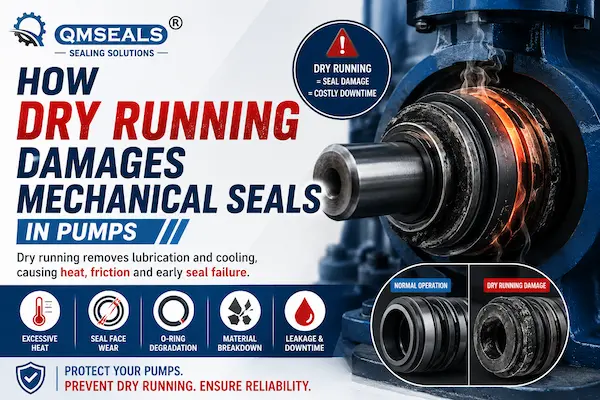
How Dry Running Damages Mechanical Seals in Pumps: Causes, Effects, and Prevention
Mechanical seals play a critical role in preventing fluid leakage in industrial pumps. Designed to operate under demanding conditions, they rely on the pumped liquid for lubrication and cooling. However, one of the most common causes of mechanical seal failure is dry running.
A dry running mechanical seal occurs when the seal operates without sufficient liquid between its sealing faces. Even a few seconds of dry running can generate excessive heat, damage seal components, and lead to costly pump downtime.
In this article, we'll explore how dry running affects mechanical seals, common causes, warning signs, and practical methods to prevent seal damage.
What Is Dry Running in Pumps?
Dry running occurs when a pump continues operating without adequate liquid flow through the seal chamber.
Under normal conditions, a thin fluid film forms between the rotating and stationary seal faces. This fluid layer performs two essential functions:
- Lubricates the seal faces
- Dissipates frictional heat
When liquid is absent, direct contact occurs between the seal faces, causing rapid heat buildup and wear.
This is the primary reason why mechanical seal dry running is considered one of the most destructive operating conditions for pumps.
Why Mechanical Seals Need Lubrication
Mechanical seals are precision-engineered components designed to maintain a controlled seal between rotating and stationary parts.
The fluid film between seal faces helps:
- Reduce friction
- Prevent excessive wear
- Maintain sealing efficiency
- Extend seal life
- Control operating temperatures
Without lubrication, friction increases dramatically, resulting in severe pump mechanical seal damage.
How Dry Running Damages Mechanical Seals
1. Excessive Heat Generation
The most immediate effect of dry running is heat buildup.
Seal faces rotate at high speeds and depend on the pumped liquid for cooling. Without fluid, friction generates temperatures that can exceed the material's operating limits within seconds.
Consequences include:
- Thermal cracking
- Face distortion
- Loss of flatness
- Reduced sealing performance
Heat-related damage is one of the leading causes of mechanical seal failure in industrial pumps.
2. Seal Face Wear
Mechanical seals depend on extremely flat sealing surfaces.
During dry running, direct contact between seal faces accelerates wear.
Common symptoms include:
- Scratches
- Grooves
- Scoring marks
- Uneven wear patterns
Once the seal faces are damaged, leakage often becomes unavoidable.
3. Elastomer Deterioration
O-rings and secondary sealing elements are highly sensitive to temperature.
Dry running can cause elastomers to:
- Harden
- Crack
- Shrink
- Lose elasticity
Damaged elastomers compromise sealing integrity and increase the risk of leakage.
4. Thermal Shock and Cracking
Rapid temperature increases followed by cooling can create thermal stress within seal materials.
This can result in:
- Face cracking
- Chipping
- Material fracture
Carbon and ceramic seal faces are particularly vulnerable to thermal shock during severe dry-running conditions.
5. Permanent Seal Failure
In extreme cases, dry running completely destroys the sealing surfaces, making repair impossible.
The seal must be replaced, resulting in:
- Unexpected downtime
- Maintenance costs
- Production losses
- Reduced equipment reliability
Common Causes of Mechanical Seal Dry Running
Understanding the causes helps prevent premature seal failure.
Pump Running Without Prime
A pump that loses prime may continue operating without fluid circulation, exposing the seal to dry-running conditions.
Closed Discharge Valve
Operating against a closed valve can restrict fluid movement and reduce cooling at the seal faces.
Empty Storage Tanks
If the source tank runs dry, the pump may continue running without sufficient liquid supply.
Blocked Suction Lines
Clogged filters, strainers, or suction pipes can reduce fluid flow to the pump.
Operator Error
Incorrect startup procedures are a common cause of pump seal failure.
Cavitation and Air Entrapment
Excessive air within the system can interrupt fluid flow and reduce lubrication around the seal faces.
Warning Signs of Dry Running Seal Damage
Early detection can prevent catastrophic failures.
Watch for these symptoms:
Unusual Heat
Excessive temperature around the seal housing often indicates insufficient lubrication.
Increased Leakage
Damaged seal faces frequently allow fluid leakage.
Burning Odor
Overheated elastomers may produce a noticeable burning smell.
Noise and Vibration
Dry-running pumps may experience abnormal vibration and noise levels.
Reduced Pump Performance
Flow rate and efficiency often decline as seal damage progresses.
Industries Most Affected by Dry Running
Dry-running issues can occur in virtually any pumping application, including:
- Chemical processing
- Water treatment
- Oil and gas
- Food and beverage
- Pharmaceuticals
- Power generation
- Mining operations
- Pulp and paper plants
In these industries, avoiding mechanical seal failure is essential for maintaining continuous production.
How to Prevent Dry Running Mechanical Seal Damage
Install Dry Run Protection Systems
Modern pumps can be equipped with:
- Flow sensors
- Pressure switches
- Level sensors
- Temperature monitoring devices
These systems automatically shut down the pump when abnormal conditions occur.
Use Seal Flush Plans
Proper seal flushing helps maintain lubrication and cooling around seal faces.
Monitor Tank Levels
Ensure sufficient liquid supply before startup and during operation.
Follow Proper Startup Procedures
Operators should verify:
- Pump priming
- Open valves
- Adequate fluid levels
- Correct system pressure
Perform Regular Maintenance
Routine inspections help identify issues before they cause severe damage.
Check:
- Seal condition
- Suction line integrity
- Valve operation
- Pump performance
Consider Advanced Mechanical Seal Designs
Certain mechanical seals are designed to tolerate short periods of poor lubrication and provide improved resistance to thermal damage.
Cost Impact of Dry Running
The cost of dry-running damage extends far beyond seal replacement.
Potential expenses include:
- New mechanical seals
- Pump repairs
- Production downtime
- Labor costs
- Product loss
- Emergency maintenance
Preventive measures are significantly less expensive than unplanned failures.
Conclusion
A dry running mechanical seal can fail within seconds when deprived of proper lubrication and cooling. Excessive heat, seal face wear, elastomer degradation, and thermal cracking are common consequences of dry-running conditions.
By understanding the causes of mechanical seal dry running, recognizing early warning signs, and implementing preventive measures, facilities can significantly reduce downtime and extend seal life.
At QMSeals, we provide high-performance mechanical sealing solutions designed for demanding industrial applications. Our sealing experts can help you select the right mechanical seal and protection strategies to maximize pump reliability and minimize costly failures.