Posted At: Jun 27, 2026 - 811 Views
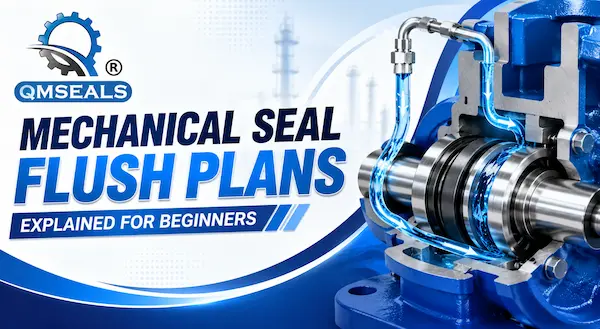
Mechanical Seal Flush Plans Explained for Beginners
Mechanical seals play a critical role in keeping industrial pumps operating efficiently and preventing process fluid leakage. However, many seal failures happen not because of poor seal quality—but because of improper operating conditions and inadequate flushing systems.
One of the most common causes is dry running mechanical seal failure, where the seal operates without sufficient lubrication or cooling. When this happens, excessive heat builds up rapidly, causing severe damage to seal faces and reducing pump reliability.
This is where mechanical seal flush plans become important.
A mechanical seal flush plan is designed to provide cooling, lubrication, pressure control, and contamination management around the seal faces. Understanding how flush plans work helps industries reduce downtime, extend seal life, and improve overall equipment performance.
In this beginner’s guide, we explain mechanical seal flush plans, why they matter, and how they help prevent seal failures.
What Is a Mechanical Seal Flush Plan?
A mechanical seal flush plan is a controlled system used to circulate clean fluid around the seal faces during pump operation.
Its main functions include:
- Cooling the seal faces
- Removing heat generated by friction
- Preventing dry running conditions
- Flushing away contaminants
- Maintaining stable pressure
Without proper flushing, seals may experience excessive friction that eventually leads to seal overheating and premature breakdown.
Flush plans are commonly used in:
- Chemical processing
- Water treatment
- Oil and gas operations
- Food processing
- Pharmaceutical manufacturing
- Industrial pumping systems
Why Mechanical Seals Need Flushing
Mechanical seals depend on a thin fluid film between rotating and stationary faces.
This fluid layer:
- Reduces friction
- Carries away heat
- Prevents direct contact
When the fluid disappears or becomes contaminated, the result is often dry running mechanical seal failure.
Common Consequences of Poor Flushing
1. Seal Overheating
Without adequate cooling, friction rapidly increases temperature.
Effects include:
- Thermal distortion
- Elastomer damage
- Reduced seal life
- Loss of sealing performance
2. Seal Face Damage
Seal faces are precision-engineered surfaces. Excessive heat or contamination causes:
- Cracks
- Scoring
- Chipping
- Uneven wear
Permanent seal face damage often requires complete seal replacement.
3. Pump Dry Running Effects
When pumps operate without sufficient liquid:
- Seal lubrication disappears
- Internal temperatures rise
- Components wear rapidly
- Pump performance declines
Long-term pump dry running effects may also damage bearings, shafts, and impellers.
How Mechanical Seal Flush Plans Work
Flush plans manage the environment surrounding the mechanical seal.
A typical flush system includes:
- Flush fluid source
- Piping arrangement
- Pressure regulation
- Cooling mechanism
- Flow control
The flush fluid passes across the seal chamber to maintain temperature and remove contaminants.
This controlled environment significantly lowers the risk of dry running mechanical seal failure.
Common Mechanical Seal Flush Plans Explained
Plan 11 – Internal Recirculation
Plan 11 takes fluid directly from the pump discharge and routes it into the seal chamber.
Best for:
- Clean liquids
- Moderate operating temperatures
Advantages:
- Simple installation
- Cost-effective operation
Limitations:
- Not ideal for dirty fluids
Plan 21 – Recirculation with Cooling
This plan includes a heat exchanger before returning fluid to the seal.
Best for:
- Higher temperature applications
Advantages:
- Better temperature control
- Reduced seal overheating
Plan 32 – External Clean Flush
Clean external fluid is introduced into the seal chamber.
Best for:
- Dirty or abrasive process fluids
Advantages:
- Protects seal faces
- Prevents contamination
Plan 53 – Barrier Fluid System
Used mainly with double mechanical seals.
Best for:
- Hazardous fluids
- High-pressure operations
Advantages:
- Increased reliability
- Enhanced cooling and lubrication
Signs Your Mechanical Seal Flush Plan Is Not Working
Watch for these warning signs:
- Rising seal temperatures
- Visible leakage
- Increased vibration
- Burn marks on seal faces
- Frequent maintenance
- Reduced pump efficiency
Ignoring these indicators may lead to severe seal face damage and unplanned shutdowns.
How Flush Plans Prevent Dry Running Mechanical Seal Failure
A properly selected flush plan helps by:
Maintaining Lubrication
Creates a stable fluid film.
Controlling Temperature
Reduces friction-related heat.
Removing Contaminants
Prevents abrasive wear.
Stabilizing Pressure
Ensures consistent seal performance.
Together, these benefits dramatically reduce the possibility of dry running mechanical seal failure.
Best Practices for Mechanical Seal Performance
To maximize seal life:
- Select the correct flush plan
- Monitor seal temperature regularly
- Maintain adequate fluid flow
- Inspect flush lines periodically
- Replace worn components early
- Follow manufacturer recommendations
Preventive maintenance is significantly less expensive than emergency repairs.
Choosing the Right Mechanical Seal Partner
Mechanical seal performance depends not only on the seal itself but also on correct application engineering.
At QMSeals, we help industries select suitable sealing solutions and support systems designed to reduce failures, improve reliability, and extend pump operating life.
Whether your application requires standard seals, cartridge seals, or advanced sealing systems, choosing the correct flush arrangement can make a measurable difference.
Conclusion
Mechanical seal flush plans may seem technical at first, but their purpose is straightforward—protect the seal by controlling lubrication, cooling, and contamination.
When implemented correctly, flush plans minimize pump dry running effects, reduce seal overheating, prevent seal face damage, and extend equipment life.
Understanding these fundamentals helps operators improve efficiency and avoid costly downtime.
If your operation experiences repeated dry running mechanical seal failure, reviewing your flush plan could be the first step toward a long-term solution.