Posted At: Oct 29, 2026 - 10 Views
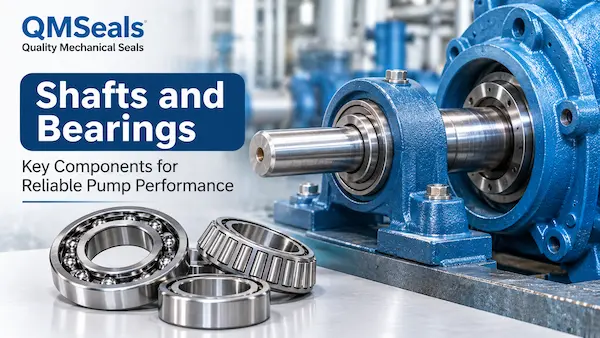
Shafts and Bearings: Types, Functions, and Their Impact on Mechanical Seal Performance
Introduction
Shafts and bearings are essential components in industrial pumps and rotating machinery. The shaft transfers rotational power from the motor to the impeller or other driven components, while bearings support the rotating assembly and help it operate smoothly under the required loads.
Although shafts and bearings perform different functions, their performance is closely connected to the reliability of the entire pumping system. Their condition can influence vibration, operating temperature, mechanical wear, and the service life of associated components, including mechanical seals.
Understanding the different shaft and bearing types, their functions, and their maintenance requirements helps engineers, maintenance professionals, and equipment operators make informed decisions about pump reliability.
In this guide, we explain how shafts and bearingswork together, the common types used in industrial pumps, and how their condition affects mechanical seal performance.
What Is a Shaft in an Industrial Pump?
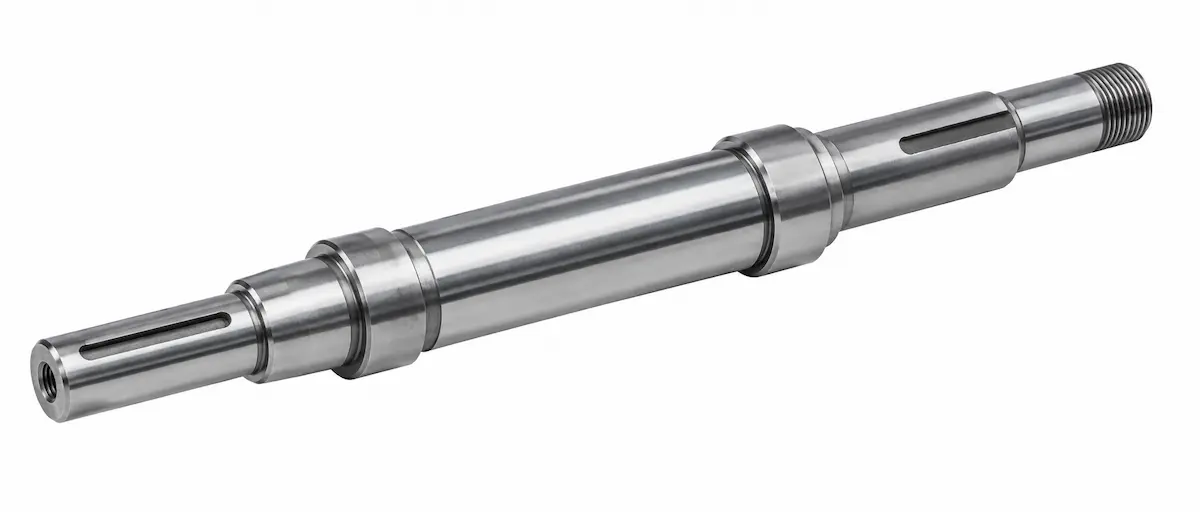
A shaft is a rotating mechanical component that transmits torque and rotational motion from a driving source, such as an electric motor, to the pump's rotating elements.
In a centrifugal pump, the shaft typically drives the impeller, allowing it to transfer energy to the liquid. The shaft also provides the mounting surface for components such as couplings, sleeves, and mechanical seals, depending on the pump design.
Main functions of a pump shaft
Power transmission: Transfers rotational power from the motor to the impeller.
Component support: Provides a mounting surface for rotating components.
Rotational stability: Maintains the intended position of the rotating assembly under operating loads.
Seal interface: Provides the shaft or sleeve surface around which the mechanical seal operates.
Reliable operation: Supports consistent pump performance when correctly designed, manufactured, and maintained.
Pump shafts must be selected according to factors such as transmitted torque, rotational speed, material strength, corrosion resistance, and the operating environment.
What Is a Bearing in an Industrial Pump?
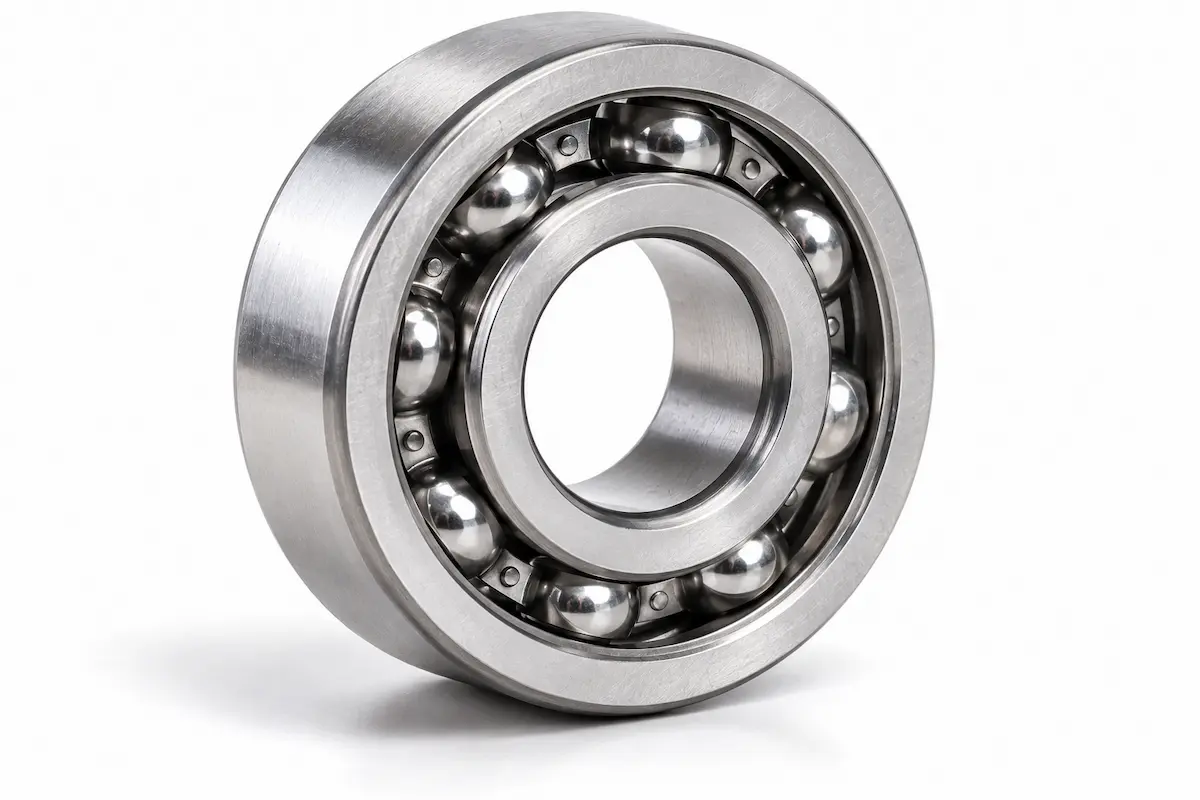
A bearing is a mechanical component that supports a rotating shaft and manages the loads generated during operation. It reduces friction between moving components and helps maintain the shaft's intended position.
In industrial pumps, bearing selection depends on the load direction, rotational speed, lubrication method, operating temperature, and equipment design.
Main functions of a pump bearing
Supports the rotating shaft.
Carries radial and, where designed, axial loads.
Reduces friction and helps control wear.
Helps maintain the correct position of the rotating assembly.
Contributes to smooth operation and equipment reliability.
Bearings require suitable lubrication, correct installation, and regular condition monitoring. Poor lubrication, contamination, excessive loads, and elevated operating temperatures can accelerate bearing wear.
Common Shaft and Bearing Types
Understanding shaft bearing types helps maintenance teams identify the components used in different pump designs and operating conditions.
1. Common types of industrial shafts
Solid shafts
Solid shafts are manufactured from a continuous section of material. They are widely used where strength, rigidity, and reliable torque transmission are required.
Hollow shafts
Hollow shafts contain a central bore that reduces weight while maintaining suitable strength for certain designs. Their use depends on the required torque capacity, stiffness, and manufacturing considerations.
Stepped shafts
Stepped shafts have different diameters along their length. These sections can accommodate bearings, couplings, sleeves, impellers, and other components.
Pump shafts with sleeves
Some pumps use a shaft sleeve over part of the shaft, particularly in areas exposed to fluid leakage, corrosion, or wear. A sleeve can provide a replaceable protective surface and may serve as the running surface for a compatible sealing arrangement.
The correct shaft design depends on the pump construction, operating conditions, material compatibility, and manufacturer's specifications.
2. Common types of bearings used in industrial pumps
Different bearing designs accommodate different loads and operating conditions.
Ball bearings
<underline>Ball bearings</underline> use rolling balls between inner and outer raceways. Depending on their design, they can support radial loads and certain axial loads. They are commonly used in electric motors and various industrial pump assemblies.
Cylindrical roller bearings
These bearings use cylindrical rollers and are suited to applications requiring substantial radial load capacity. Their suitability for a particular pump depends on the bearing arrangement and operating conditions.
Tapered roller bearings
Tapered roller bearings can support combined radial and axial loads. They are used in equipment designs where the magnitude and direction of the loads require this capability.
Spherical roller bearings
Spherical roller bearings are designed for demanding radial loads and can accommodate limited angular displacement within the bearing. Their suitability depends on the equipment design and operating requirements.
Thrust bearings
Thrust bearings are designed to support axial loads acting along the shaft. Depending on the pump configuration, axial loads may arise from hydraulic forces and other operating conditions.
Radial bearings
Radial bearings support loads acting perpendicular to the shaft axis. In centrifugal pumps, radial bearing arrangements help support the shaft and maintain the rotating assembly's intended position.
How Do Shafts and Bearings Work Together?
A shaft and bearing work as part of a coordinated rotating assembly. The shaft transmits torque, while the bearings support the shaft and accommodate the loads specified by the equipment design.
During pump operation, the motor rotates the shaft, which drives the impeller. The bearings support the rotating assembly as it operates under mechanical and hydraulic loads.
A typical arrangement works as follows:
The motor supplies rotational power.
The coupling transfers power to the pump shaft.
The shaft rotates the impeller.
The bearings support the shaft and accommodate the required loads.
The mechanical seal controls leakage where the rotating shaft passes through the stationary pump casing.
The performance of each component contributes to overall pump reliability. Selecting the correct bearing arrangement, maintaining appropriate lubrication, and using suitable shaft and sealing components help reduce premature wear and unplanned maintenance.
How Bearing Condition Affects Mechanical Seal Performance
A mechanical seal prevents or controls fluid leakage where a rotating shaft passes through a stationary equipment housing. It is an important component in pumps handling water, chemicals, oils, and other industrial fluids.
Mechanical seals contain precision sealing faces and secondary sealing elements. Their performance depends on the seal design, fluid properties, operating pressure, temperature, rotational speed, and equipment condition.
Bearing condition can affect the operating environment of a mechanical seal in several ways.
1. Excessive vibration
Worn or damaged bearings may contribute to increased vibration. Depending on its magnitude and frequency, vibration can affect sealing-face stability and accelerate wear in the sealing assembly.
Investigating abnormal vibration helps maintenance teams identify potential bearing or other rotating-equipment problems before they cause more extensive damage.
2. Increased operating temperature
Insufficient lubrication, excessive bearing loads, or internal bearing damage can raise operating temperatures. Heat may affect nearby components and contribute to reduced seal life, depending on the equipment configuration and heat-transfer conditions.
Regular temperature monitoring can help identify abnormal operating conditions.
3. Increased mechanical wear
A deteriorating bearing can affect the support and operating behaviour of the rotating assembly. If the resulting shaft movement exceeds the mechanical seal's permitted operating limits, the sealing faces and secondary sealing elements may experience additional stress and wear.
The actual effect depends on the pump and seal design, so bearing and seal condition should be assessed together when recurring failures occur.
4. Unexpected pump downtime
Bearing damage and mechanical seal failure can both lead to unplanned maintenance. When one component fails repeatedly, replacing it without investigating the underlying cause may result in further breakdowns.
A structured inspection of the shaft, bearings, lubrication system, and mechanical seal can help identify the source of recurring problems.
Common Causes of Bearing Wear
Bearing wear can result from several operating and maintenance conditions. Identifying the cause is important when selecting replacement components or planning preventive maintenance.
Inadequate lubrication: Insufficient or unsuitable lubricant can increase friction and wear.
Contamination: Dust, moisture, process fluid, or other foreign particles can damage bearing surfaces.
Excessive loading: Loads beyond the bearing's design limits can accelerate fatigue and reduce service life.
Elevated temperature: Excessive heat can affect lubricant performance, clearances, and bearing materials.
Incorrect installation: Improper handling, mounting, or installation procedures can damage bearing components.
Natural fatigue: Bearings experience material fatigue over time, particularly under repeated loading and demanding operating conditions.
The appropriate inspection and maintenance procedures depend on the bearing type, lubrication method, equipment manufacturer's instructions, and operating environment.
Maintenance Tips for Shafts, Bearings, and Mechanical Seals
A preventive maintenance programme can help detect developing problems and reduce the risk of unexpected equipment failure.
Inspect the shaft and associated components
Check accessible shaft surfaces and sleeves for scoring, corrosion, wear, or damage. Pay particular attention to surfaces specified by the pump and seal manufacturers.
Monitor bearing temperature and vibration
Record operating temperature and vibration readings where suitable monitoring equipment is available. Investigate significant changes from established operating baselines.
Maintain the correct lubrication
Use the lubricant type, quantity, and replenishment interval specified by the bearing or equipment manufacturer. Avoid both insufficient lubrication and excessive greasing where applicable.
Check the mechanical seal for leakage
Inspect the seal area for abnormal leakage, heat, noise, or visible damage. Follow the seal manufacturer's guidance when deciding whether an observed leakage rate is acceptable.
Follow proper installation procedures
Use the specified tools, fits, clearances, and installation methods when replacing bearings or mechanical seals. Avoid damaging precision surfaces during disassembly and reassembly.
Investigate repeated failures
If a bearing or mechanical seal repeatedly fails, examine the full operating system rather than treating the failed component in isolation. Review lubrication, contamination, operating loads, temperature, vibration, and the suitability of the replacement parts.
Choosing the Right Mechanical Seal for Your Pump
Selecting a suitable mechanical seal requires more than identifying the shaft diameter. Engineers should also consider the pumped fluid, pressure, temperature, rotational speed, equipment design, and operating requirements.
Different applications may require different sealing arrangements and materials.
Single mechanical seals: Commonly used in general pump applications where one sealing arrangement is suitable for the process conditions.
Cartridge mechanical seals: Pre-assembled units that can simplify installation and setting when compatible with the equipment.
Bellows mechanical seals: Use an elastomeric or metal bellows design, depending on the application and required material compatibility.
Double mechanical seals: May be appropriate for applications requiring a buffer or barrier-fluid arrangement and additional containment.
Explore the relevant QMSeals single mechanical sealsfor general pump applications. You can also review the QMSeals bellows seal rangeto understand the available sealing configurations.
The final selection should be based on the actual pump and process specifications. Consult the equipment or seal manufacturer when operating conditions are demanding or uncertain.
Conclusion
Shafts and bearings are fundamental components of industrial pumps, and their condition influences the reliability of the rotating assembly. Understanding shaft and bearing types, maintaining appropriate lubrication, monitoring operating conditions, and inspecting components regularly can help reduce premature wear and unplanned downtime.
Mechanical seal performance also depends on the condition of the surrounding equipment. Choosing a seal that matches the pump's operating requirements and following the manufacturer's installation and maintenance guidance can support reliable fluid containment.
Frequently Asked Questions
1. What are shafts and bearings used for?
Shafts transmit rotational power to driven components, while bearings support rotating shafts and accommodate the loads defined by the equipment design. Together, they help rotating machinery operate reliably.
2. What are the common types of shafts?
Common designs include solid shafts, hollow shafts, stepped shafts, and shafts fitted with protective sleeves. The appropriate type depends on torque, strength, geometry, material compatibility, and equipment requirements.
3. What are the main types of bearings used in industrial pumps?
Common bearing designs include ball bearings, cylindrical roller bearings, tapered roller bearings, and spherical roller bearings. Pump bearing arrangements may also be described by the loads they support, such as radial or axial loads.
4. How does bearing wear affect a mechanical seal?
Bearing wear may increase vibration, temperature, or shaft movement. If these conditions exceed the mechanical seal's operating limits, they can accelerate sealing-face wear and contribute to leakage or premature failure.
5. How can bearing life be improved?
Bearing life can be supported by using the correct bearing for the application, maintaining suitable lubrication, preventing contamination, following installation instructions, and monitoring temperature and vibration.
6. How do I select a mechanical seal for a pump shaft?
Consider the shaft dimensions, seal chamber design, fluid properties, operating pressure, temperature, speed, and equipment requirements. Confirm compatibility with the seal manufacturer's technical specifications before installation.