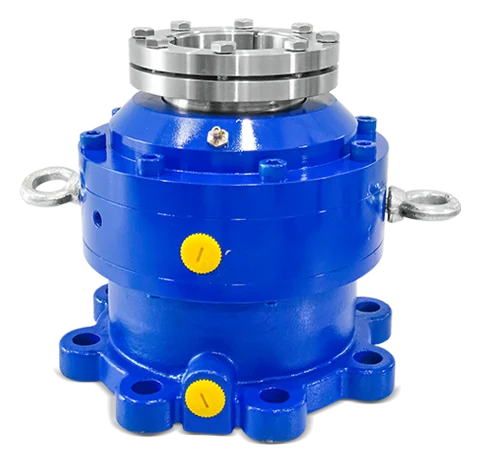
Posted At: Apr 23, 2026 - 709 Views
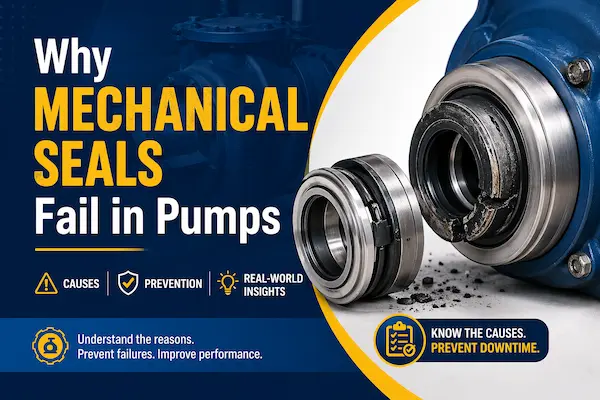
Why Mechanical Seals Fail in Pumps: Causes, Prevention & Real-World Insights
Mechanical seals are critical components in industrial pumps, designed to prevent leakage and maintain system efficiency. However, even high-quality seals can fail if operating conditions, installation practices, or system design are not properly managed.
Understanding why mechanical seals fail in pumps is not just about listing causes—it’s about identifying patterns, analyzing root issues, and implementing long-term solutions.
This guide goes beyond basics to help industries reduce downtime, improve reliability, and extend seal life.
What is Mechanical Seal Failure?
Mechanical seal failure occurs when the seal can no longer maintain a proper sealing interface between rotating and stationary components. This leads to leakage, reduced pump efficiency, and potential equipment damage.
Failure is rarely due to a single reason. In most cases, it’s the result of combined mechanical, thermal, and operational factors. Don’t miss our complete breakdown of the top 10 mechanical seal failure causes.
The Real Reasons Why Mechanical Seals Fail in Pumps
Instead of generic causes, let’s break down practical, industry-observed failure scenarios. know
1. Dry Running – The Silent Seal Killer
Dry running happens when the pump operates without sufficient fluid.
What really happens:
- The fluid acts as both a lubricant and coolant
- Without it, friction increases rapidly
- Seal faces overheat and get damaged within seconds
Real-world scenario:
A pump started without priming during maintenance can destroy a seal almost instantly.
2. Improper Installation Practices
Even a high-quality seal will fail if installed incorrectly.
Common mistakes:
- Incorrect alignment
- Over-tightening components
- Damaging seal faces during installation
- Ignoring manufacturer guidelines
Impact:
Leads to uneven wear, leakage, and early failure.
3. Shaft Misalignment & Runout Issues
Mechanical seals depend on precise alignment.
What goes wrong:
- Shaft wobbling (runout)
- Angular misalignment
- Excess vibration
Result:
- Uneven contact between seal faces
- Increased wear and leakage
This is a hidden cause often missed in basic seal failure analysis.
4. Contamination & Abrasive Particles
One of the most underestimated causes of pump seal failure.
Sources of contamination:
- Dirt and dust
- Process solids
- Chemical residues
Effect:
- Scratches on seal faces
- Increased friction
- Leakage and performance loss
Industries handling slurry or wastewater are especially prone to this issue.
5. Thermal Shock & Temperature Variations
Sudden temperature changes can damage seals.
Example:
- Cold fluid entering a hot pump
- Rapid process temperature fluctuations
What happens:
- Seal materials expand or contract unevenly
- Cracking or distortion occurs
6. Pressure Imbalance
Mechanical seals are designed for specific pressure limits.
When exceeded:
- Seal faces separate
- Leakage begins
- Seal life reduces drastically
7. Incorrect Seal Selection
This is where many industries go wrong.
Using the wrong seal type for:
- Fluid type
- Temperature
- Pressure
- Operating conditions
Result:
Even a perfectly installed seal fails prematurely.
Warning Signs of Mechanical Seal Failure
Before complete failure, seals often show warning signals:
- Visible leakage
- Unusual noise or vibration
- Increased temperature around seal area
- Reduced pump efficiency
- Frequent maintenance requirements
Ignoring these signs leads to unexpected downtime.
Mechanical Seal Failure Analysis: A Practical Approach
Instead of guessing, industries should follow a structured mechanical seal failure analysis approach.
Step 1: Identify the Failure Pattern
- Sudden failure → likely dry running or pressure spike
- Gradual failure → wear, contamination, or misalignment
Step 2: Inspect Seal Faces
- Scoring → contamination
- Burn marks → dry running
- Cracks → thermal shock
Step 3: Evaluate Operating Conditions
- Was the pump running within limits?
- Were there fluctuations in pressure or temperature?
Step 4: Check Installation & Alignment
- Was proper procedure followed?
- Any shaft vibration?
This approach helps in root cause identification, not just symptom fixing.
How to Prevent Mechanical Seal Failure
Prevention is always more cost-effective than replacement.
Ensure Proper Installation
- Follow manufacturer guidelines
- Use trained technicians
- Avoid handling seal faces directly
Avoid Dry Running
- Always prime the pump
- Use dry-run protection systems
Maintain Proper Alignment
- Regularly check shaft alignment
- Monitor vibration levels
Control Contamination
- Use filtration systems
- Maintain clean operating conditions
Monitor Operating Parameters
- Keep pressure and temperature within limits
- Avoid sudden fluctuations
Choose the Right Seal Design
Selecting the correct seal for your application is critical.
Consider:
- Fluid characteristics
- Temperature range
- Pressure conditions
- Industry requirements
Why Seal Quality Matters More Than You Think
Not all mechanical seals perform the same.
Low-quality seals may:
- Wear out faster
- Fail under stress
- Increase maintenance costs
Choosing reliable solutions from experienced manufacturers like QMSeals ensures:
- Better durability
- Improved performance
- Reduced downtime
Real Industry Insight: The Cost of Ignoring Seal Failure
In many industrial setups, seal failure is treated as a minor issue—until it leads to:
- Pump shutdown
- Production loss
- Increased maintenance cost
- Safety risks
A small seal failure can turn into a major operational problem if not addressed properly.
Conclusion
Understanding why mechanical seals fail in pumps is essential for improving system reliability and reducing downtime. Most failures are not random—they are predictable and preventable with the right knowledge and practices.
By focusing on proper installation, correct seal selection, and regular monitoring, industries can significantly extend seal life and improve pump performance.
Frequently Asked Questions
1. What is the most common cause of mechanical seal failure?
Dry running is one of the most common and damaging causes.
2. How can seal failure be prevented?
Proper installation, correct seal selection, and maintaining operating conditions help prevent failure.
3. What is mechanical seal failure analysis?
It is the process of identifying root causes of seal failure to prevent recurrence.
4. Can contamination damage mechanical seals?
Yes, abrasive particles can scratch seal faces and lead to leakage.